
Sound:Tracks at CPH:DOX 2022
CPH:DOX's audio-visual program SOUND:TRACK featured commissioned live soundtracks by artists such as Félicia Atkinson, Astrid Sonne, Sofie Birch, Loke Rahbek and Frederik Valentin.


As a festival that's aiming to be one of the biggest documentary film festivals in the world, CPH:DOX works hard on developing and featuring programs that distinguish it from other similar festivals. Having a strong music program that transcends the usual music documentary selection has been an important feature of CPH:DOX for a while now. Although music performances can be a common addition to film festivals – some of which pride themselves on encouraging forms such as expanded cinema or audio-visual performances – CPH:DOX is trying to carve out its own niche by turning things around. Instead of presenting film-related VJ sets that accompany music performances, CPH:DOX meets the musicians halfway between such sets and traditional scoring by commissioning selected artists to create and perform their own scores for specifically curated films.
This process forms the backbone of the SOUND:TRACK (or “LYD:SPOR” in Danish) program, a series of events featuring performances by musicians and composers who have composed original music for selected films. The films range from obscure archival material to experimental and documentary film classics. The visual material itself presents a basic set of possibilities and/or limitations, not only in terms of its content but also in terms of its preexisting sound, or lack thereof. Different approaches pose different challenges for artists participating in the program, which ultimately produces wildly varying results.
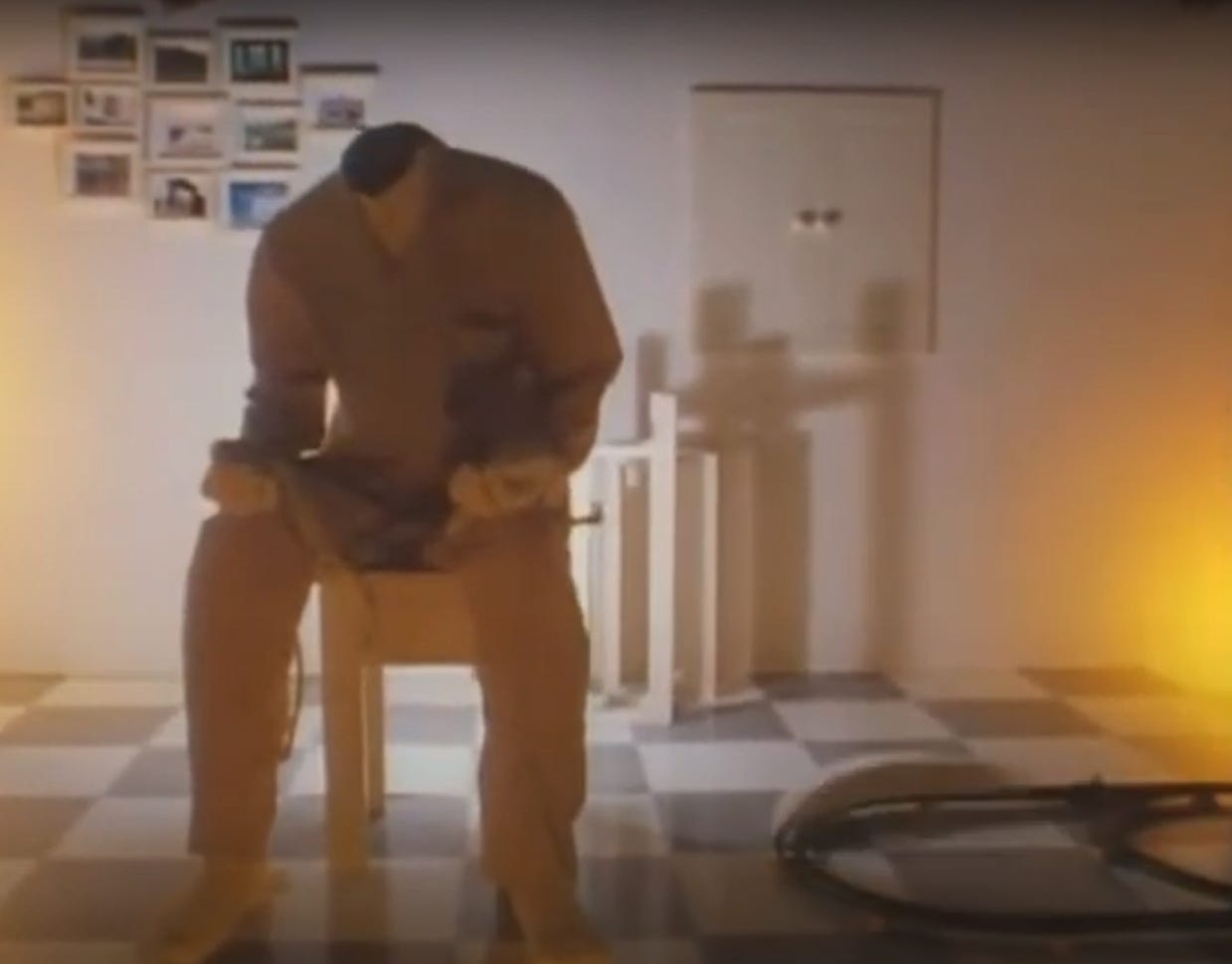
For example, Astrid Sonne composed a live score for three short films by the Japanese experimental filmmaker and director Takashi Itō (the films being ‘Zone’, ‘Spacy’ and ‘Drill’). The films have their own score or sound, but as Sonne revealed in a brief Q&A after her performance, she chose not to watch the films with their original sound at all, so as not to influence her process. This proved to be one of the many good decisions she made while working on this project, as her SOUND:TRACK performance at Statens Museum for Kunst was a definitive highlight of the whole program.
It might seem like an easy choice to work with experimental film, as it doesn’t present certain restrictions in tone and familiar tropes in the same way that narrative film does. However, experimental film often relies heavily on rhythm, pace and particular aesthetic choices, and Takashi Itō’s films are no exception. In fact, they might not be instantly relatable to the kind of music Astrid Sonne is known for, yet she’s found a way to create a soundtrack that seems to perfectly balance her own and Takashi Itō’s sensibilities. A pause between each of the short films provided a useful moment to breathe between intense cinematic experiences, and helped set the stage for completely different compositions featuring sounds ranging from pensive to playful, and from ambient to pumping beats. It was a relatively short but powerful performance, and the only thing that could have helped make it even more immersive would have been a darker venue – or curtains that reach all the way to the floor, preventing the afternoon sunlight from coming into the screening hall.
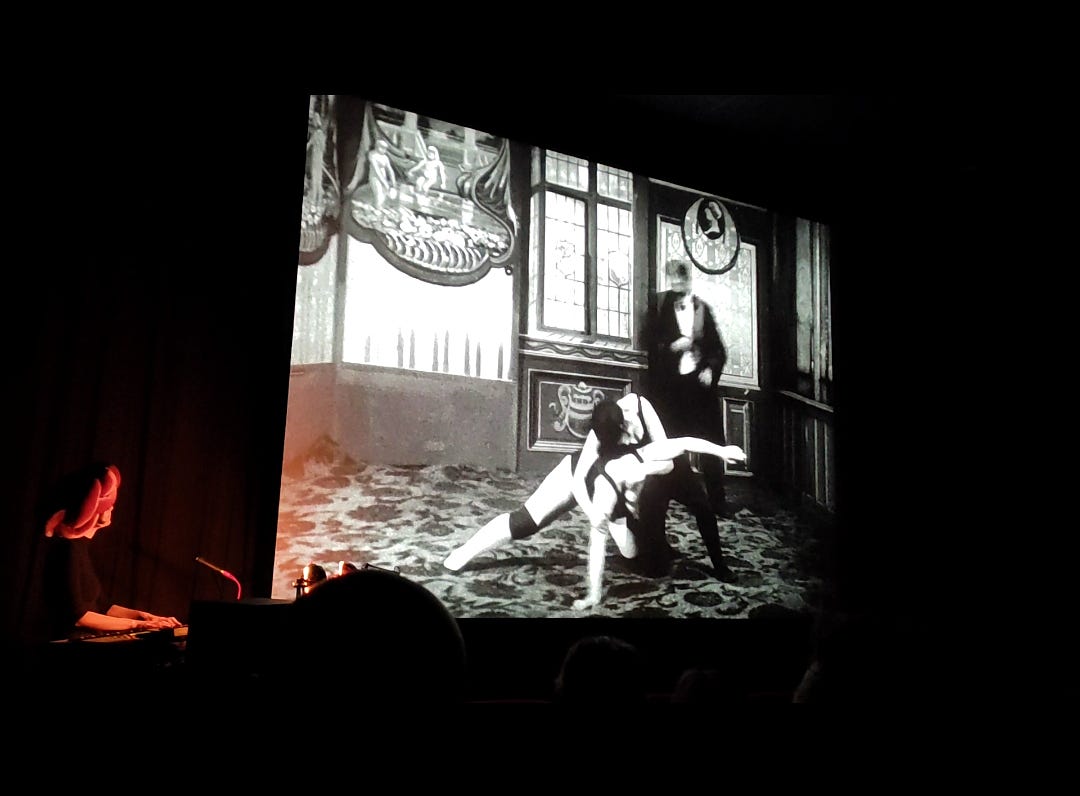
Sofie Birch didn’t have to face the issue of a preexisting soundtrack, as she created pieces for old silent film recordings. Presented at Cinemateket, her compositions followed a set of early 20th-century clips from the Danish Film Institute’s archives, mostly showing footage of people performing physical activities, such as men showcasing their strength, children’s PE classes and women’s wrestling. In the Q&A session, Birch said that she opted to avoid footage of automated action such as traffic because she preferred the human motion; however, most of the videos shown relied heavily on strictly trained, mechanical movements of the human body. The audience seemed to enjoy the often funny film clips very much, even though – taken all together – they did give off a peculiar, if somewhat propaganda-infused vibe, of physical superiority. It didn’t seem as though Birch or the audience gave this any particular thought, although the compositions were wonderfully mesmerizing. The hypnotic, yet carefully executed, performance helped set the already high expectations for her upcoming record Holotropica even higher.
Loke Rahbek and Frederik Valentin’s live score for Chris Marker’s essay-documentary classic Sans Soleil met somewhat similar challenges – or, rather, some of the decisions made in the process ended up yielding possibly unwanted results. In its original form, Sans Soleil relies on narration as much as it does on the film footage, building meaning at the intersection of the two. In their live performance at Hotel Cecil, Rahbek and Valentin chose to show the film without subtitles, effectively cutting off an integral part of the film. As a mere series of images – many of them taken in Japan and Guinea-Bissau – the film assumes the form of a typically Western travelogue featuring representations of curious, far-away peoples and their customs. Save for details such as the banal auditive responses that directly interpreted the movements on the screen in an almost foley artist manner, the performance was, overall, quite enjoyable. It was just difficult to shake off the exoticizing, colonialist vibe that a live-soundtracked Sans Soleil projected without its textual aspect, even if its fascinating imagery was additionally enhanced by an exquisite musical backdrop.
Unlike Rahbek and Valentin’s almost sold-out night at Hotel Cecil, Félicia Atkinson’s audio-visual collaboration with artist and filmmaker Ben Rivers at Charlottenborg Social Cinema seemed to have flown under the radar a bit. A shame, really, as Atkinson is a very reliable artist, who delivers a strong live performance on any type of occasion. Once again, she did not disappoint. Her collaboration with Ben Rivers was developed specifically for CPH:DOX and featured footage from Rivers’s films live-soundtracked by Atkinson. Although the predominantly ethereal imagery may have been an easy fit for Atkinson’s lush ambient soundscapes, her gorgeous live performance deftly avoided falling into some common soundtracking tropes and clichés. True, it did feel mostly like a Félicia Atkinson concert with a cute visual backdrop, but that doesn’t say so much about Rivers as it does about Atkinson’s capability of transporting the listener to another world – one where additional visual imagery can feel redundant.
The only downside to the Atkinson/Rivers collaboration was that it was performed at Charlottenborg Social Cinema, which continues to be one of the worst venues at CPH:DOX. An improvised cinema and performance space within Kunsthall Charlottenborg, the venue is little more than a big hall with chairs and an installed screen and PA, which makes it difficult to get into the whole immersive, audio-visual experience type of thing. Although trying out new venues and approaches to programming is hardly a bad thing, this sometimes takes something away from performances themselves, a few of which might have been better experienced in a more appropriate venue. Still, SOUND:TRACK’s dedication to exploring the possibilities of Copenhagen venues that are, for the most part, not traditional music or cinema venues is quite commendable and contributes to establishing a broader festival vibe in the city.
SOUND:TRACK presents a valuable addition to CPH:DOX’s already colossal program. Considering that the festival’s strong points lie in the NEW:VISION and ARTISTS & AUTERS sections, which feature films leaning towards art, experimental and hybrid forms, it makes perfect sense for CPH:DOX to continue developing an audio-visual program such as SOUND:TRACK to reinforce its already established position in the bold experimental niche.