
Music You Can Wrap Yourself in
A conversation with Ingri Høyland and Ida Urd


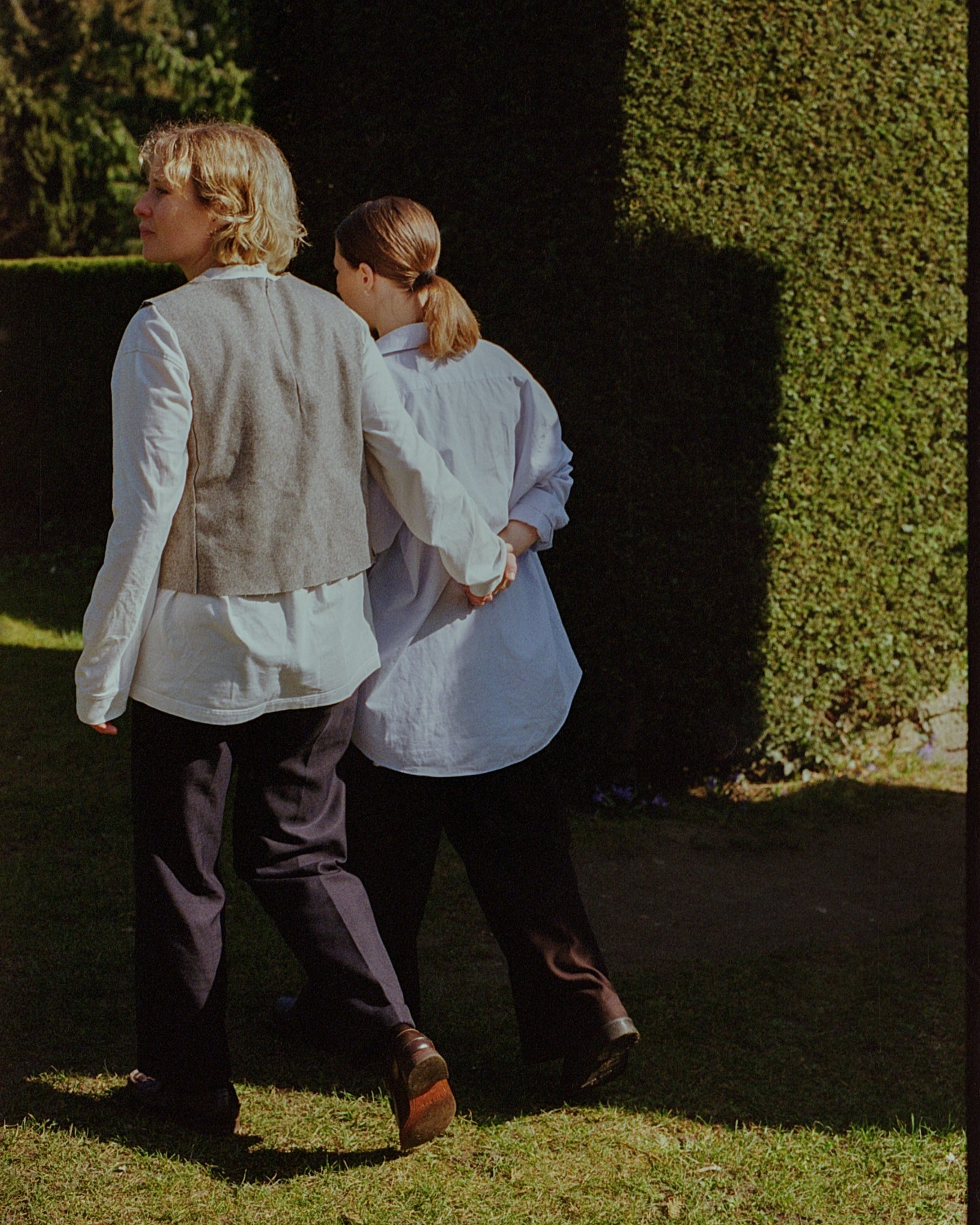
Nearly five decades since Brian Eno famously described ambient as music that is “ignorable as it is interesting” in the liner notes for his seminal 1978 album Music for Airports, the style has steadily – even stubbornly – continued to slip out of these shackles. The past decade, in particular, has seen ambient’s tendrils wrap around the concrete structures of pop and rock, ignoring the burden of being “ignorable” by actively seeking attention and interaction. Released late in 2025, Duvet by Copenhagen-based composers, musicians, and vocalists Ida Urd and Ingri Høyland is the very marrow of this reshaped ambient aesthetic.
Architected from steady, obliquely rhythmical bass pulses and the expansive shimmer of ostensibly traditional electronic textures, Duvet is as warm and inviting as its name suggests. Yet, within itself, it carries agency and nuanced emotions, reflecting a tender camaraderie between its performers. “We hope the album can be a space where you’re allowed to be with whatever feelings or moods you carry,” Urd explains.
“For us, the process of creating this music has been very much about accepting our own and each other’s starting points – emotions, obstacles, and life situations.” Urd’s words feel almost as if addressing the other, sparingly quoted part of Eno’s adage, about how music should “induce calm and a space to think”. Høyland’s thoughts follow a kindred trajectory, gesturing towards receptive listeners who imbue the music with their own meaning. “Through the music, we’re trying to suggest a more open sonic architecture that doesn’t mirror one particular feeling, home, or space, but can be a place you step into – with room for a wide spectrum of emotions: anxiety, curiosity, peace,” she explains. “A duvet is also something you can wrap yourself (or your friend) in, lie on top of, or pull over your head.”
Despite Duvet being the first album they’ve made under both their names, Urd and Høyland have been cultivating an artistic and personal friendship for far longer. The pair studied at Copenhagen’s Rhythmic Music Conservatory, albeit at different times. “We were both part of the environment around the school, but we didn’t really get to know each other until Ingri asked me to play bass in her project, Hôy La,” Urd says.
“Ingri was very ambitious and made some really beautiful, exciting music that I loved playing, but she was also just kind and easy to be around. You end up spending a lot of time together when you play concerts. In 2020, we went on a shared tour in Japan, playing each other’s music. Since then, we’ve been slowly moving towards entering a creative process together.” Despite interviewing via email, the genuine energy between the musicians bursts through the text. Høyland is quick to reciprocate the compliments: “I felt the same about Ida. She was just too cool. We’ve known each other for almost ten years!”
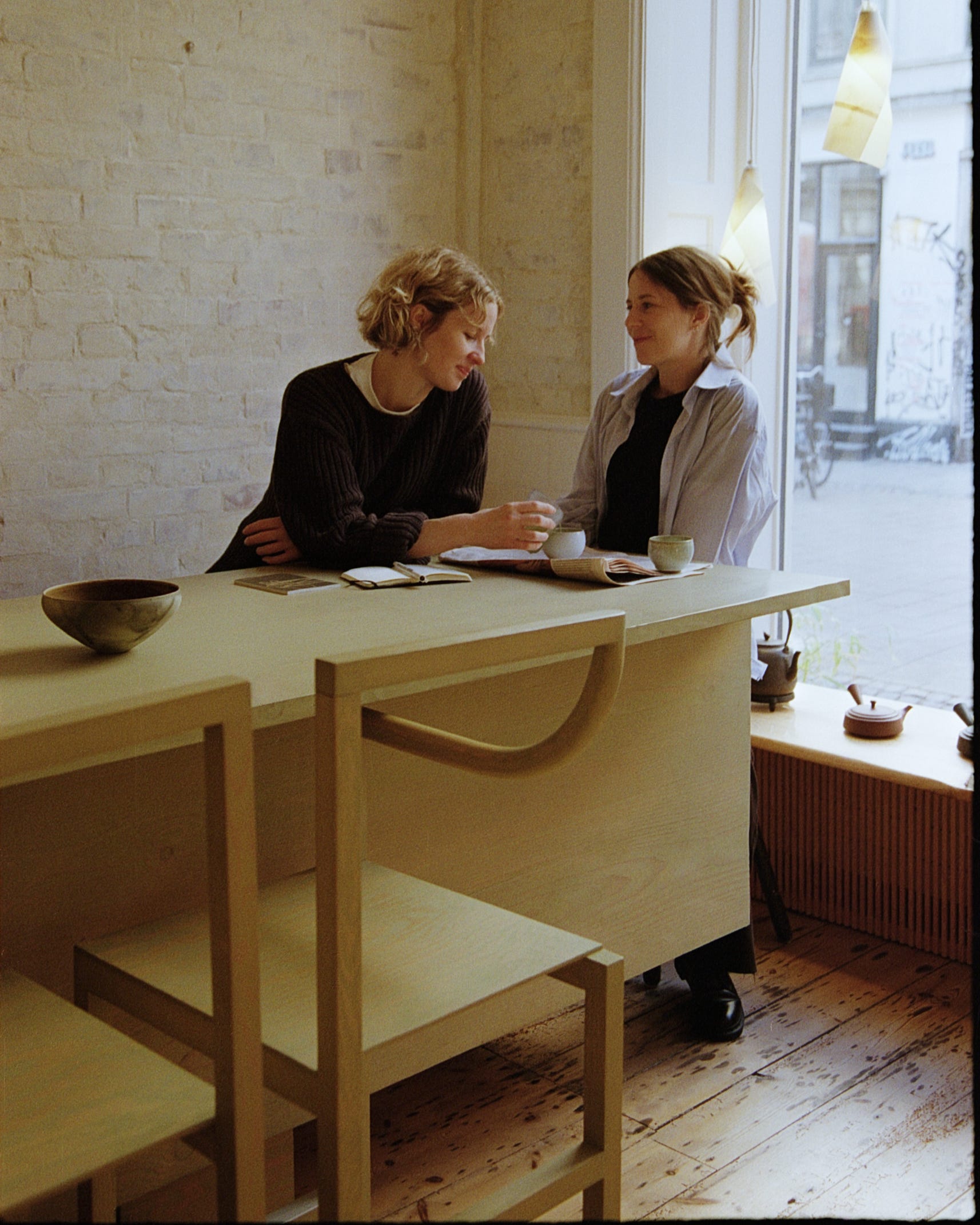
Echoes of the experimental pop sensibilities of Høyland’s Hôy La, the lowercase, droning electronics of her 2023 album Ode to Stone – on which Urd also participated – and the electroacoustic melancholy of Ida Urd’s 2023 release Future Woman Am Pm are woven throughout the sprawling yet intimate atmospheres in Duvet. Although you can easily hear these threads to the past in the interplay between kinetic low-frequency vibrations and atmospheric electronics of the title track, the album gestated from a different, unique process. For one, it is informed by the duo’s improvisational language, which developed through years of friendship.
“The compositions emerge as a kind of musical dialogue, where we simultaneously – and in turns – respond to each other’s suggestions: a melody, a sound, a tone, a movement. Action and reaction,” Høyland observes. “At first, it’s quite spontaneous and improvisational, but once a mood is established, we talk through the components – placement, development, length, entrances, exits, rhythms, spectrum, and not least the emotional qualities we experience in the composition, and how those can be strengthened. An important part of the process is not to overwork things – if we don’t feel the material, we’d rather move on and begin somewhere else.”
Having retreated to a summerhouse on the Danish coast, Høyland and Urd incorporated mundane rituals into their music to interrogate and nourish space. “We arrive at the house, unload the car, make coffee, sit for a bit, move some furniture around, maybe cook something, figure out where to make music, maybe a bit more coffee, and then slowly gather the courage to set up the gear,” Urd recalls. “A big table – ideally a shared one – with instruments, pedals, synthesizers, microphones, a small sound card, two pairs of headphones, a pink splitter. Moving in and out of a creative process. The first tone is often the longest – we need to find each other, tune in, open up, settle, sink into it.”
“By now, we have a pretty established rhythm and dynamic for getting the process started. We just naturally agree on how the process unfolds, what a day looks like. Of course, there are always small crises and pauses where we get stuck or hear different paths,” Høyland adds. The consequences of one of these crises can be heard on “Peaches”, where the repeating bass line trembles with trepidation, attracting uncomfortably organic squishing and sloshing effects, electronic pulses, and a closing deep breath or sigh (depending on your perspective).
As they started working on what would become “Peaches”, Urd experienced a “huge meltdown”. “I was standing outside on the terrace crying, just in a very difficult place,” she says. “But then we simply began making sounds with our instruments, and that whole session became incredibly releasing for me – for both of us, I think. There’s something very beautiful in holding, understanding, and supporting each other through sound, being there for one another on a different, slightly indefinable level.”
Within Urd & Høyland’s work, the withdrawal to an isolated cottage is a deliberate, even necessary moment, introducing a unique dialectic that eschews the usual pitfalls of escapism. “In our lives, with children and many projects in motion, it’s incredibly valuable to be able to go somewhere else, to feel ourselves and each other, and maybe process something,” Urd expands on the practicality of their process. Meanwhile, Høyland views “quiet music in a chaotic world” as both a form of escapism and “an attempt to comprehend and to stay present”. “It’s simply a humble attempt to embrace life, and hopefully to create music where the listener can pause for a moment and listen both inward and outward,” Urd completes.
Duvet is also a synthesis of the duo’s varied artistic practices: Urd’s bass playing; Høyland’s collaborations with sculptors and writers; singing; and even ASMR-like cues. Although the latter is incidental, soft sonic movements align with their interest in the intimacy in sound and the small details – “breaths, noise, friction” – that make the music physical and present.
“I often collaborate with different kinds of artists and artistic languages, because I feel that the way, for example, a writer or sculptor works is often closer to my own process. I don’t know anything about notation and so on, so it’s all rather intuitive – almost like making music with clay. Ida has, over many years, learned my way of talking about and hearing music, so I feel very at ease now”, Høyland ponders. “I think, in a way, the music I’ve always made began in something like the Duvet universe, but when I started making music ten years ago, I thought it had to fit into an A–B structure. That was fun too – playing in a band, singing choruses – but over time I’ve moved closer and closer back into my intuitive musical language.”
The pieces on Duvet are not song-oriented, so the voice becomes a texture – a significant one – pressed between layers of electronics and bass. “We like to use the voice on equal terms with other instruments. The voice has qualities that a synth will never be able to match,” Urd asserts, with Høyland expanding, “I think the voice brings something safe, familiar, and emotional, while the electronic elements can do the opposite – creating a distance from the body, which opens things up and hopefully leaves more space for other bodies and emotions.”
Urd and Høyland’s work, exemplified by cuts like the elegiac “Chamber” and wide-eyed hope of “Sono”, belongs to a wider stylistic drift of vibrant and propulsive ambient music emerging from Copenhagen on labels like Escho (see: Astrid Sonne) and Rhizome – on which both have released music in the past. Yet, Duvet’s warmth fits particularly neatly into the roster of Albert Salinas and Philip Sherburne’s Balmat label, flanked by the dream-pop ambient of Patricia Wolf’s Hrafnamynd and the deconstructed downtempo of µ-Ziq’s Manzana.
“I guess Copenhagen is not that big and a lot of us went to the same conservatory where we’ve been influenced and inspired by the same compositional methods, literature, and aesthetics, which definitely connects all of us,” Høyland muses. “But even though there’s talk of a joint sound, I also feel there’s a wide and diverse spectrum of expressions and music that is equally connected to musical environments across borders. I recently played a concert at the art academy in Katowice, Poland, and we were all discussing the same music, literature, etc., which is really weird and nice at the same time. At the conservatory, I remember working a lot with understanding one’s context when creating music, and in that sense, it’s not only local contexts that influence the music, but often global tendencies, crises, and social movements.”
As a parting question, still carrying a pleasant haze from the latest visit to Duvet, I ask them if their music can also help resolve emotions or if it is more reactive, echoing their earlier thoughts, merely something to cover yourself with from time to time. “Maybe both,” Urd lingers. “Music can be a place where something is released or processed, but not necessarily ‘resolved’. For us, it’s also a space you can enter, where there’s room to be with whatever you bring – not to escape it, but to give it attention in a different way.”
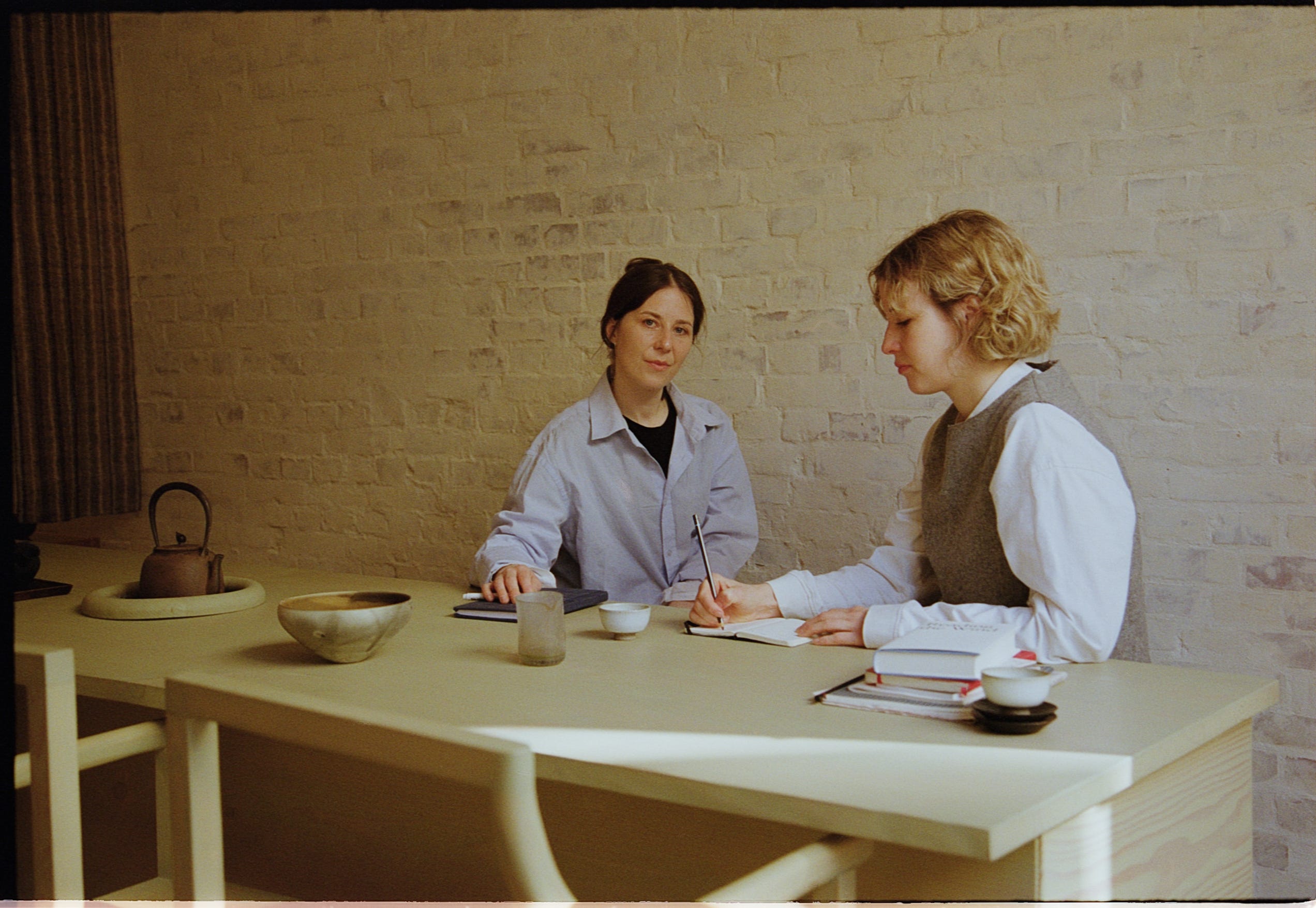
Photos: Amanda Bødker
 | A guest post by
|